
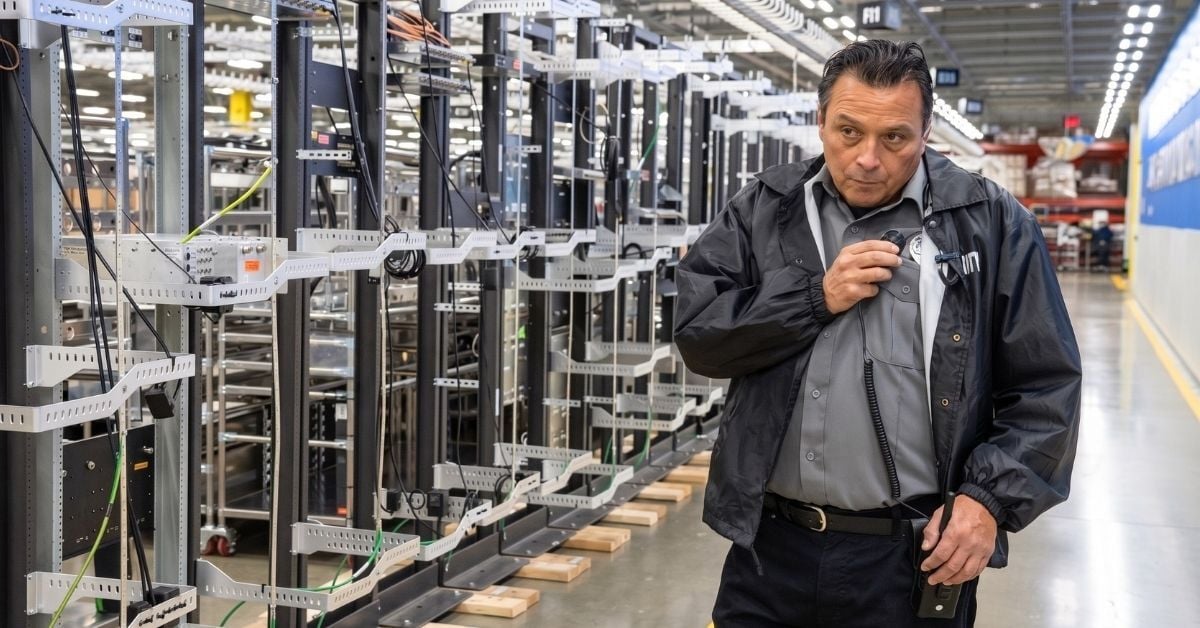

Chicago is in the middle of a data center construction boom. In 2024, the city claimed a top-five spot in the U.S. data center markets.
When first responders enter one of these facilities, the emergency responder radio coverage system (ERRCS) must work. Non-compliance risks a denied certificate of occupancy, costly project delays, hefty fines, and fire marshals being unable to respond effectively to your building's emergency call.
Below, we'll break down specific codes that apply to data centers and walk you through a two-part solution to ensure compliance.
Built to Block Everything, Including Radio Signal
Data processing centers are engineered for one purpose: protecting critical infrastructure. Thick concrete walls, reinforced steel framing, raised flooring systems, and underground utility corridors all serve that mission well.
Data centers are also among the most radio-signal-hostile construction environments.
The interference problem compounds from the inside out. Thousands of active servers generate electromagnetic interference (EMI) that disrupts wireless frequencies across the facility. Multi-building campus layouts stretch the coverage challenge further still.
This is the environment that first responders walk into during a fire, a cooling failure, or a hazardous materials event, and it's the environment their radios have to work in without exception.
Code Requirements Every Data Center Must Meet
The framework governing in-building radio coverage for first responders draws on three primary standards from two organizations: the International Code Council (ICC), which publishes the International Fire Code, and the National Fire Protection Association (NFPA), which publishes fire alarm and emergency communications standards.
These codes exist for one reason: to guarantee first responders can communicate when lives are on the line.
Together, IFC and NFPA codes establish what your building must achieve, how it must be tested, and what ongoing compliance entails.
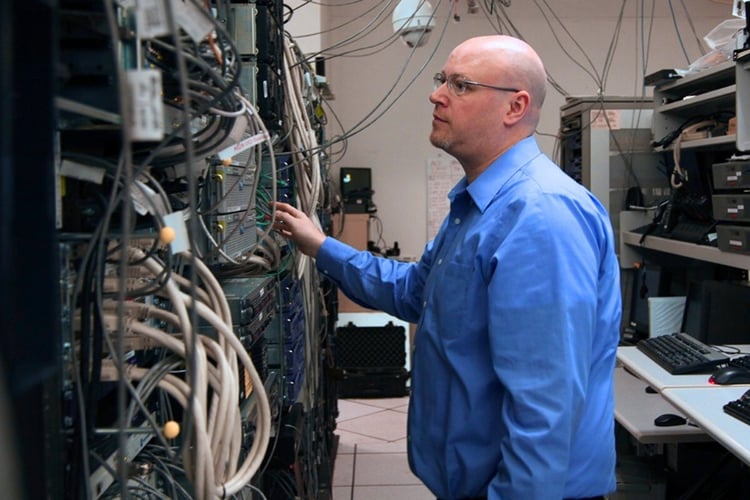
IFC Section 510: International Fire Code
95 percent signal coverage throughout all portions of a building
The International Fire Code requires a minimum of 95 percent signal coverage throughout all portions of a building. For data centers in Illinois, that means coverage cannot be limited to lobbies, security desks, or common areas.
Coverage must include every floor, every corridor, and every server hall.
One detail that may catch facility operators off guard: IFC Section 1103.2 extends these requirements to existing buildings, not just new construction. If your facility was built before this became standard practice, you may already be out of compliance without knowing it.
NFPA 1225: Emergency Services Communications Systems
99 percent coverage in critical areas, 90 percent in general areas
NFPA 1225 is the current consolidated standard for emergency responder communication enhancement systems, streamlining what was previously covered under NFPA 1221 and NFPA 1061.
Under NFPA 1225, critical areas require 99 percent signal coverage. Critical areas are specifically defined and include fire command centers, fire pump rooms, exit stairs, exit passageways, elevator lobbies, standpipe cabinets, and sprinkler sectional valve locations.
General areas of the building require 90 percent coverage. In a data center, where server halls, cooling infrastructure, and utility corridors span a large footprint, nearly every functional area of the facility comes under scrutiny.
NFPA 72: National Fire Alarm and Signaling Code
Continuous BDA monitoring tied to the building's fire alarm panel
This is the standard that turns a one-time installation into an ongoing operational obligation.
NFPA 72 requires that the status of your Bi-Directional Amplifier (BDA)—the signal-boosting component at the heart of most in-building coverage systems—be continuously monitored by the building's fire alarm panel. If the BDA goes offline, the fire alarm system must register that as a fault condition.
Annual testing is required. Documentation must be maintained. This isn't a system you install and forget, which has direct implications for choosing a communications partner.
The system design must be approved by the Authority Having Jurisdiction (AHJ), typically your local fire marshal, before installation begins. Fail the acceptance test, and your building does not open.
How a Compliant In-Building Radio System Works
Meeting emergency responder radio coverage requirements in a data center isn't a single product purchase. It's a system with two interdependent components.
Distributed Antenna Systems (DAS)
A Distributed Antenna System is a network of small antennas installed throughout a building and connected to a central signal source. Instead of relying on a single powerful transmitter to push a signal through walls and floors, a DAS distributes the signal from multiple points inside the building itself, placing coverage where it's needed most.
In a data center environment, DAS design is not a template exercise. The antenna placement, cable routing, and signal levels must be engineered according to the specific layout of your facility, the construction materials involved, and the frequencies your local first responders use.
Bi-Directional Amplifiers (BDA)
In environments where passive DAS alone cannot overcome signal loss, a Bi-Directional Amplifier boosts the signal in both directions from the radio to the outside network, and from the network back to the radio.
Most data center deployments require a BDA as part of the system, given the density of construction materials and the electromagnetic interference environment.
Why Not LTE as a Compliant Backup?
Some facilities managers assume that strong cellular or LTE coverage inside their building satisfies the emergency responder radio coverage requirement, but it does not.
NFPA 1225 and the IFC are explicit: the standard applies specifically to land mobile radio (LMR) systems, the dedicated public safety networks that police, fire, and EMS agencies utilize.
Commercial cellular networks are not an approved substitute, and a data center with excellent LTE coverage and no compliant DAS system is still a non-compliant building.
ERRCS Must Match First Responder Frequencies
A DAS that supports cellular coverage does not automatically support first responder radio coverage. First responders operate on specific public safety frequencies, and your system must be engineered around the exact frequencies used by your local police, fire, and EMS agencies.
A DAS without that coordination leaves first responders without coverage on the channels they actually use. A BDA without proper DAS infrastructure creates uneven coverage that fails grid testing.
The system only works when both components are designed, installed, and tested as a single integrated solution, which is why the vendor you choose matters as much as the equipment itself.

What to Expect from a Coverage Assessment
Designing and installing a public safety DAS requires careful engineering and coordination. For many data center operators, architecture or engineering companies specifying new construction or major renovations are often the first to identify the emergency responder radio coverage obligation and bring in a communications integrator for a DAS evaluation, site survey, and pricing.
If this critical conversation hasn't happened for your project, start it early to avoid the high costs of retrofitting infrastructure later in construction.
The process begins with a radio coverage assessment. A qualified team walks the facility, measures signal strength throughout the building, and identifies the areas where communication will fail under current conditions.
From there, the system is designed around your specific layout, including antenna placement, amplifier requirements, and the exact frequencies your local public safety agencies require. That design is submitted to and approved before installation begins.
Once installed, the system is tested against the required coverage thresholds, and results are documented for your permanent compliance record. Annual testing and BDA monitoring through your fire alarm panel are required from that point forward.
Because every data center is different, there is no off-the-shelf solution. The system has to be built around your facility, which means the team doing the work needs to understand both the technical requirements and the local regulatory environment.
How ChiComm Helps Secure Compliance
ChiComm is a Motorola Solutions Elite Service Specialist and full-service wireless communications integrator across Illinois, Indiana, Wisconsin, and Michigan.
The entire compliance process—survey, system design, jurisdiction authority coordination, installation, testing, and ongoing maintenance—is handled by one team, under one contract, with one point of accountability.
ChiComm's union technicians, with an average tenure of 15 years, handle every phase of the project from the first site visit through annual recertification.
And because ChiComm services what it installs, your facility stays compliant without pulling your internal team away from core operations. Ongoing monitoring, maintenance contracts, and 24/7/365 support mean your BDA stays online, and your documentation stays current.
Need help evaluating radio coverage in your building? The IFC and NFPA requirements covered here aren't exclusive to data centers or to Illinois; they apply to most large commercial and industrial facilities across the U.S.
Chicago Communications designs and installs customized public safety and commercial DAS solutions that meet local code requirements wherever you operate.
Our team is here to help you assess your needs and design a solution tailored to your space.