The Growing Need for Healthcare Safety Solutions
Hospitals and healthcare facilities face a growing number of safety challenges:
Instant communication and real-time visibility across a facility help teams respond faster and keep everyone safe. Studies show that improved communication systems enable hospital staff to coordinate more efficiently, reduce response times, and improve the delivery of patient care.
Two-way radios provide reliable, push-to-talk communication that instantly connects nurses, security teams, facility managers, and administrators across buildings and campuses.
Benefits include:
Dedicated networks that continue working during emergencies
Healthcare teams rely on radios to coordinate patient transport, respond to emergencies, and communicate critical information quickly across departments. Learn more about two-way radios in action. See how one hospital successfully implemented a new two-way radio system in this case study.
Advanced video surveillance systems provide healthcare organizations with real-time monitoring and intelligent alerts, helping security teams detect, assess, and respond to incidents quickly.
Video security can help:
Modern hospital surveillance systems enable security teams to monitor large campuses and maintain awareness of potential risks throughout the facility.
For a more detailed understanding of how Video or Access Control can enhance your security, check out The Hospital Security Guide.
Body-worn cameras are becoming an important tool for hospital security teams and frontline staff.
Benefits:
Body cameras also help create a safer environment by encouraging better behavior among patients and visitors and by providing security teams with valuable evidence during incidents. Gain a more detailed understanding of how Body-Worn Cameras can enhance your healthcare operation.
Creating a safer healthcare environment requires more than individual technologies—it requires a connected strategy. By integrating two-way radios, video surveillance, access control, and body-worn cameras into a unified safety ecosystem, hospitals can improve communication, strengthen situational awareness, and respond more effectively to incidents across their facilities. ChiComm brings decades of experience in designing, deploying, and supporting these solutions, providing healthcare organizations with a single trusted partner to help protect patients, staff, and operations. Explore the resources below to learn how integrated communication and security technologies can help your organization build a safer hospital.
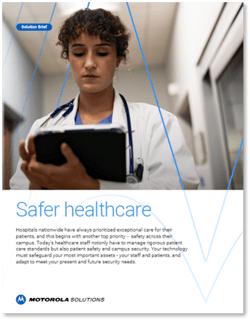
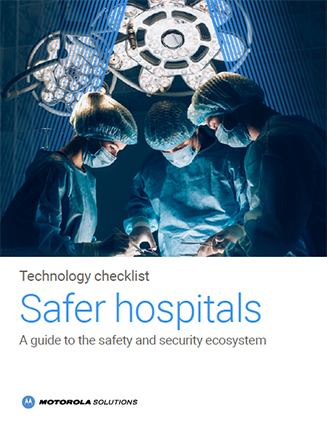
Avigilon Safer Hospitals eBook |
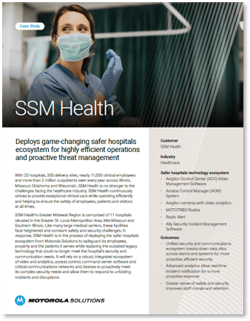
Radio Communication Case Study |
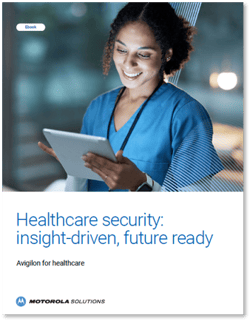
Healthcare Video Security |