
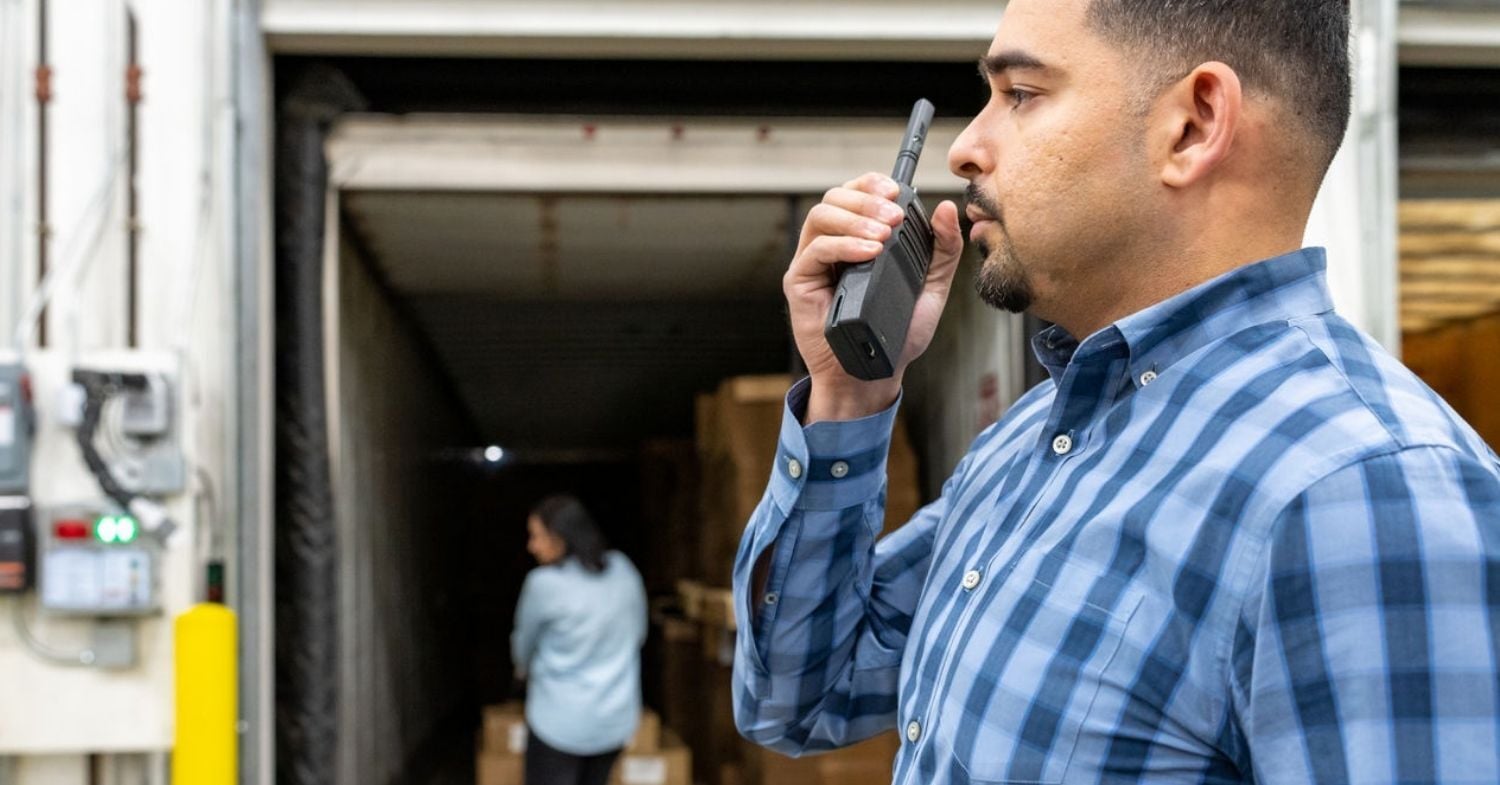
With most people carrying a cell phone in their pocket, why would a business invest in a separate communication system?
Ask the operations manager who spent 10 minutes trying to reach an employee whose phone died at 4%. Or ask the facilities coordinator who watched a $1,000 screen shatter on a concrete floor.
The industries that use two-way radios aren't behind the times. They've tested and deliberately chosen two-way radios.
Below, we look at hotels, retailers, and manufacturers that still opt for two-way radios over smartphones, and the specific reasons why.
Hospitality: Keep Guests Happy
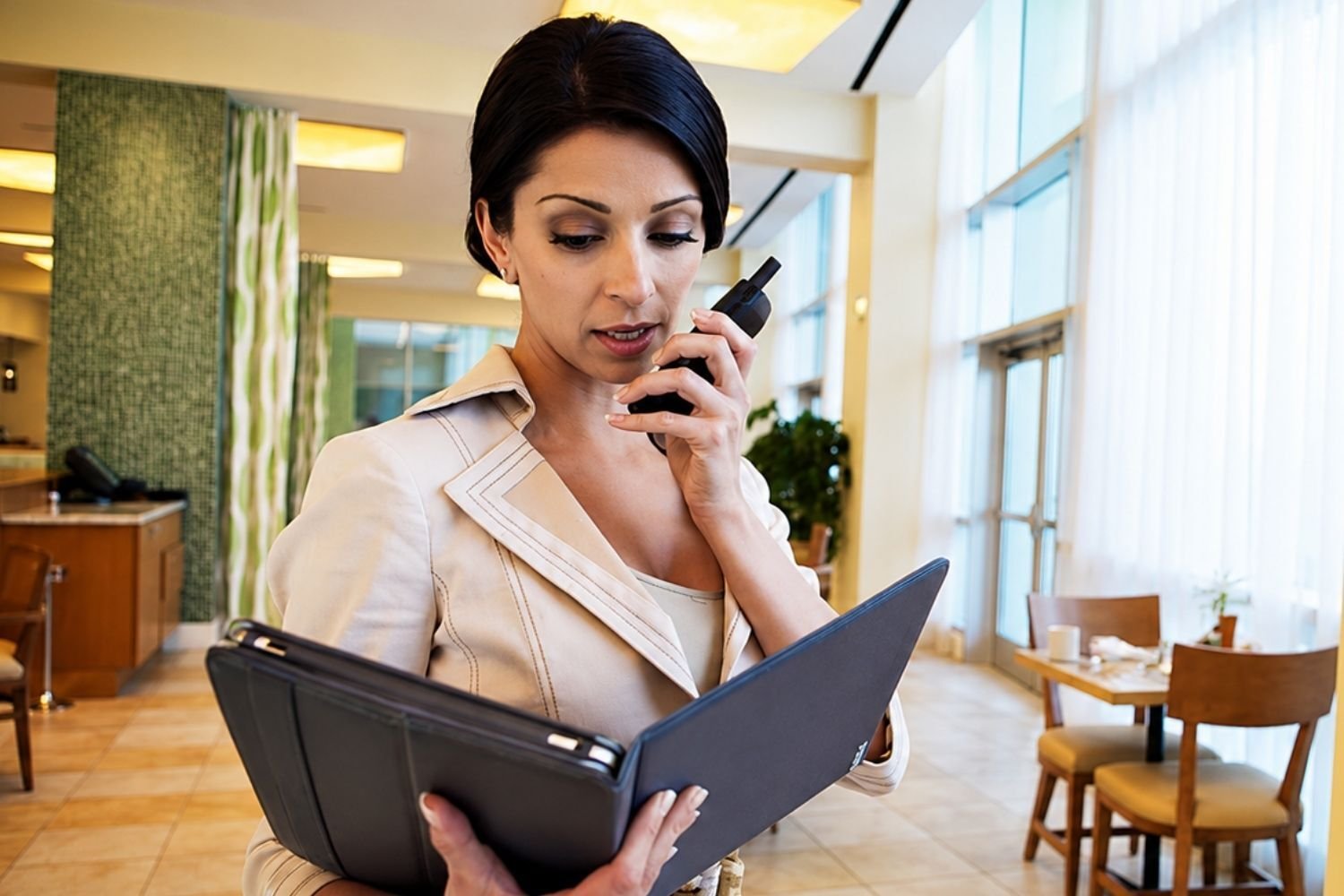
In hotels and event venues, the guest experience lives and dies by how fast your team communicates across every floor.
Smartphones, however, lose signal in the exact places your staff work most: concrete stairwells, basement kitchens, and parking structures.
Here's how two-way radios outperform smartphones:
- Crystal-clear voice: Operate on a dedicated frequency—no cell towers required, no dropped signal.
- Work-only communication: Combine voice communication and work order data on a single device, bypassing personal notifications and distractions.
- Rugged durability: Built to withstand drops, humidity, and the physical demands of a housekeeping or engineering shift.
- Long battery life: Designed for 24-hour operations without hunting for a charger mid-shift.
Aloft New Orleans Downtown put two-way radios to the test, operating inside a signal-resistant 31-story building in downtown New Orleans. Cell signal couldn't keep up with thick concrete walls, constant construction noise, and real-time guest requests coming in around the clock, but Motorola digital radios kept every department connected from day one.
"Having voice and data on the MOTOTRBO radio is a great solution. It cuts down on having to carry two devices and the cost of upkeep for two."
— Mark Abadie, Chief Engineer, Aloft New Orleans Downtown
With unified, seamless coverage across every floor, guests noticed the results without ever seeing the effort.
Ready for a closer look?
Access ChiComm’s free safety checklist and specialized case studies to see how top-tier hospitality teams optimize their operations.

Retail: Keep Customers Impressed and Inventory Protected

Picture two employees standing on a retail floor. One is scrolling through her phone, head down, thumb moving. The other has a radio clipped to her vest, eyes up, already moving toward a customer before they even ask for help.
Two-way radios project a professional image and empower your team to act with speed and certainty.
The Two-Way Radio Advantage Over Smartphones
- Coordinated Loss Prevention: Radios serve as a visual deterrent to shoplifters; one-touch communication instantly alerts the entire security team without tipping off suspects with a phone call.
- Rapid Team Response: From inventory checks to curbside pickups, everyone hears a request simultaneously and answers in seconds.
- No Monthly Fees: You own the hardware and the frequency, removing the burden of recurring service contracts or data plans.
To further bolster security, these two-way radios also integrate with body-worn cameras to help mitigate accountability concerns.
Find the Perfect Fit for Your Store
ChiComm provides complimentary communication audits to help you design a system that works for your unique layout.

Manufacturing: Keep Workers Safe and Operations Moving
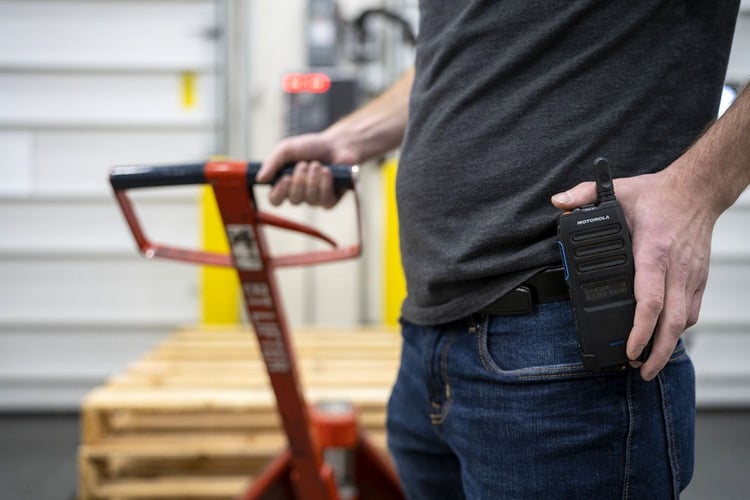
Where heavy machinery runs, hazardous materials move, and drivers are spread across three states, the stakes are too high for a device that can drop a call or die mid-shift.
How two-way radios surpass smartphones:
- One-touch emergency alerts: A dedicated emergency button on every radio instantly alerts safety teams and dispatch—no unlocking a screen, no finding a contact, no seconds lost.
- Man-down warnings: Motion-sensing technology automatically notifies supervisors if a worker stops moving.
- GPS location tracking: Radio-integrated GPS provides dispatchers with real-time visibility across every site and every truck—no apps required, always on.
Watch how a two-way radio outperforms a smartphone when a manufacturing production manager needs to respond fast:
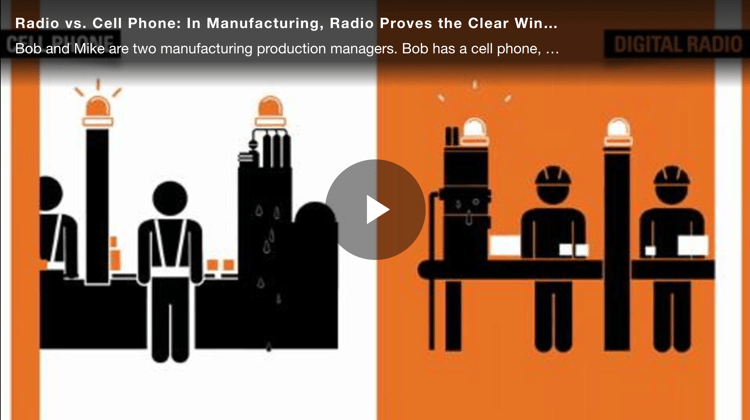
Smartphones were built for convenience. In manufacturing, two-way radios are built for the job.

Radios Keep Ahead Where Smartphones Fall Behind
Hospitality, retail, and manufacturing aren't the only industries that use two-way radios over smartphones.
In healthcare, teams rely on two-way radios to coordinate across campuses during emergencies, avoiding the HIPAA risks associated with personal devices.
In K-12 education, radios keep every staff member reachable across every corner of campus, including direct 911 access when cell networks are overloaded.
The industries that use two-way radios aren't loyal to the technology out of habit. They're loyal to it because two-way radios are reliable where smartphones aren’t.
Want to dig deeper into how digital radios compare to smartphones across every scenario?
These resources are a great next step:
- More on the Industries that Use Two-Way Radios:
https://www.chicomm.com/conversion-pages/communications-solutions-by-industry - Cell Phones or Two-Way Radios—a Side-by-Side Comparison:
https://www.chicomm.com/blog/cell-phones-or-two-way-radios-no-contest