
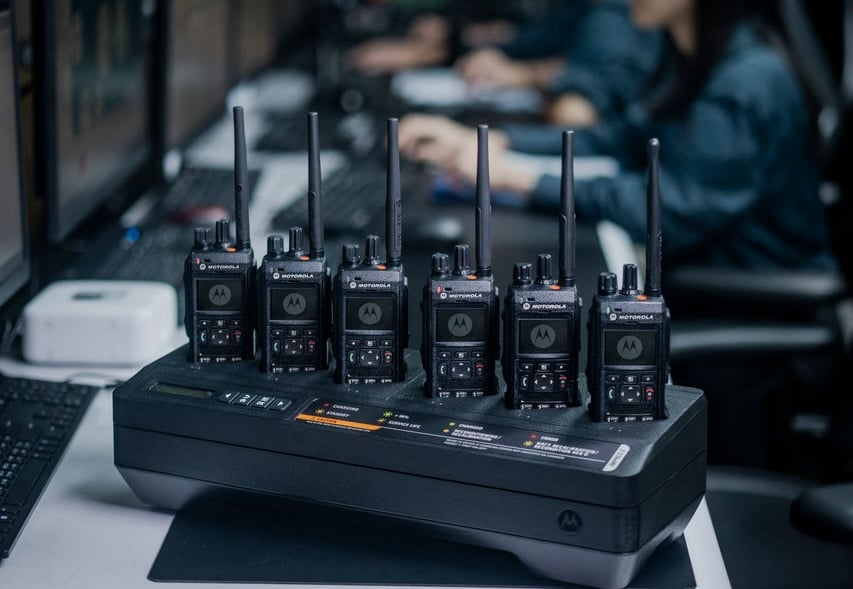

Budgets are tight, so the goal is simple: use the right technologies (and the right upgrades) to improve reliability, coverage, and interoperability.
Let’s walk through what delivers the most value in 2026 and how to match each option to the problems you actually need to solve.
Start With Outcomes, Not Products
Before you compare models, align on the problems to solve. Ask:
-
Where do calls still drop or coverage thins out?
-
Which teams must interoperate during incidents, not just day-to-day?
-
Do a few remote or off-site users need to talk into radio groups?
-
Which safety events should reach radios and dispatch, not just email?
-
What can we phase now versus later without rework?
Technologies and Upgrades That Move the Needle
1) Let Radios Talk With Phones and PCs
Suppose a handful of supervisors or remote staff need to talk while off-site. Use a secure push-to-talk app on LTE or Wi-Fi that connects selected users to your existing radio talkgroups. That means that with tools like WAVE PTX, a manager can speak into a phone or laptop and reach the same group on handheld radios. You extend reach without standing up a whole new platform.
When it helps: travel days, after-hours on call, small remote sites, vendor coordination.
2) Grow Capacity with What You Already Have
Running out of room for users or talkgroups? You can often add headroom with targeted changes, such as adding an extra repeater, enabling a license feature, or updating the controller, instead of replacing the system.
What that looks like: adding a channel so multiple teams can talk at once without stepping on each other, or enabling a feature that lets the system handle more simultaneous calls.
A short engineering review usually surfaces the most economical next step.
3) Modernize Video and Access Control, and Keep What Works
You do not have to start from scratch. Many organizations keep most of their existing cameras and upgrade the head end to an Avigilon video management system. That gives you web and mobile access, faster search, and clean integrations with radios and dispatch, without ripping everything out.
Result: better visibility and quicker response with minimal disruption.
4) Add Safety Layers Where Cameras Cannot Go
In some sensitive areas, cameras are not appropriate. Vape and air-quality sensors, noise and aggression detection, and similar devices can trigger alerts to radios, so your team responds faster while respecting privacy.
In outdoor or no-cell zones, call boxes (e.g., Call24) provide a direct, simple way to request help.
Typical use: restrooms, stairwells, and other no-camera zones.
5) Strengthen the Foundation: In-Building Coverage and Dispatch
Public-safety-grade in-building coverage is essential, especially after remodels or expansions. Where required, a properly engineered Distributed Antenna System improves talk-in and talk-out for first responders and staff. Modern dispatch consoles (such as Avtec or CommandCentral AXS) streamline multi-channel coordination, recording, and handoffs for busy operations.
After a remodel or expansion, your local fire code official (AHJ) may require testing of in-building radio coverage. Verify performance first, then design the proper fix (often a properly engineered DAS) to meet code and keep first responders and staff connected.
6) Targeted Situational Awareness
Where it fits your environment, consider license plate recognition at key entrances or weapons detection at high-traffic entry points. Scope carefully. Placement, policies, and data handling matter as much as the hardware.
The win: faster, more confident decision-making at the door.
Buyer Beware: Common Pitfalls We See
-
“Deal” batteries online. Old stock can look new, but will not hold a charge. Buy authorized so you know the manufacturer dates and specs.
-
Off-brand radios. Some units cannot be programmed for use here or will not interoperate with your fleet.
-
Down-tiering devices. Dropping to a lower class radio can remove the audio processing, durability, or features your workflows rely on.
Where AI Helps
Use AI where it speeds decisions, not as a replacement for radio coverage. Good fits include video search, smart alerts, license plate recognition, and weapons detection that push relevant events to radios and dispatch. That cuts noise and helps teams act faster. AI won’t fix dead zones; for voice reliability, you still need solid RF design, in-building coverage where required, and the right radios, repeaters, DAS, and consoles.
How to Move Forward Without Overspending
-
Do a coverage and capacity check. Confirm dead zones, loading, and growth room before you buy.
-
Prioritize interoperability. Map which teams must talk together during incidents, then set up talkgroups and policies accordingly.
-
Phase projects. Lock in the pieces that fix reliability now and stage the rest for later budgets.
-
Keep what works. Reuse cameras, wiring, and licenses when it makes sense. Put dollars where they deliver the most significant improvement.
Work With a Communications Expert
Ready to take the next step? At Chicago Communications, we can evaluate your current system, identify the highest-impact changes, and phase the work to fit your budget.

Frequently Asked Questions
Do we need AI to improve our communication system in 2026?
Sometimes. AI is useful for video analytics and access control alerts that push the right events to your radios. It does not replace the basics of reliable radio coverage. Plan your RF, confirm in-building coverage, and use the right radios, repeaters, DAS, and dispatch.
Can we add a few remote users without rebuilding our whole system?
Yes. If only a small group needs off-site access, connect select users to radio talkgroups over LTE or Wi-Fi from phones or PCs. It is a focused way to extend reach without a full new platform.
We already have cameras. Do we need to start over to modernize security?
Not necessarily. Many organizations keep existing cameras and upgrade the head end for web and mobile access, better search and alerts, and clean integrations with radios and dispatch.
How do we know if we need an in-building coverage solution?
If you have gaps in stairwells, basements, or other critical areas, or if your AHJ requires public-safety coverage, a Distributed Antenna System may be needed. Testing will confirm the requirement and the right design.
Are cheaper batteries and accessories worth it?
Usually not. Old or non-approved parts can shorten runtime, add heat, or fail early. Use approved batteries and chargers to protect performance and warranty.